Festival Drinkware: Materials, Refills and Custom Branding
Compare festival bottles by material, capacity and care. Explore real catalog products and plan refill points, custom branding and distribution.
Choosing a festival bottle means answering two questions together: which product suits the participant, and how will it be used at the event? A reusable bottle provides an opportunity for repeated refilling, but that opportunity depends on practical arrangements. If water points are missing or the bottle cannot be brought into the venue, an attractive design will not solve the problem.
Plan branded drinkware alongside the water supply, admission rules, and distribution process. The examples below compare aluminum, glass, and steel products from Meenevabrik's catalog. Use them to define purchasing criteria, request a clear quote, and inspect a sample before committing to a larger quantity.
Check the venue's rules first
Ask the organizer which materials are permitted. Some venues restrict glass, while others distinguish between empty and filled bottles at entry. Do not assume that an arrangement accepted at another event will work here. Include the venue's requirements in the buying brief before selecting models.
Map refill points against the participant's route. Drinking water should be easy to find, and the practical arrangement should allow people to refill without abandoning the idea because of queues. Decide who will check that the stations remain available and clean during the day. A map or clear signs help connect the bottle with an actual opportunity to use it.
If bottles are distributed at registration, decide whether they are handed over empty. Make the manufacturer's care instructions and first-use washing guidance understandable. Prefilling bottles requires its own handling and storage arrangements. Ordering a promotional bottle is not automatically the same service as supplying and serving drinking water; the work needs separate planning.
Compare materials against the event setting
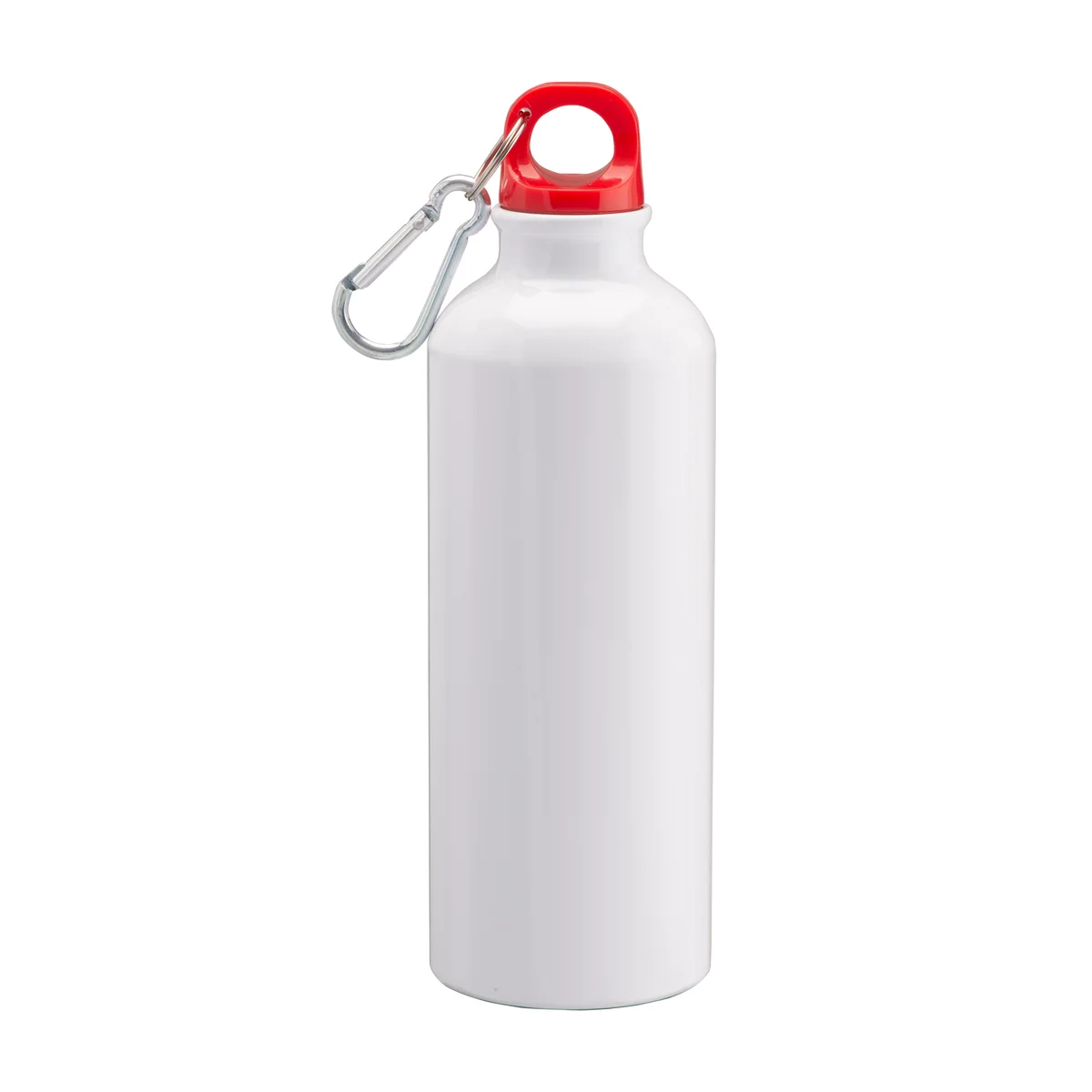
The 500 ml aluminum sports bottle includes a carabiner. Its smaller capacity can suit a participant who is moving around and can refill during the day. Inspect the cap, the opening, and how the bottle feels in the hand. Treat the carabiner as a carrying accessory rather than assuming it is a safety component for sporting equipment.
The DEEPLY glass bottle holds approximately 500 ml and has a screw-on bamboo lid. The supplier describes it as boxed. Glass may suit a calm indoor meeting, but breakage and venue restrictions need consideration for an outdoor festival. Do not select it solely from a photograph if the setting requires another material.
The 500 ml recycled stainless steel thermal bottle has a double wall and a steel cap. Its supplier describes temperature retention for hot and cold drinks for up to 12 hours. Actual performance depends on conditions. If retention time is essential, request the model's test conditions and assess a sample using the intended routine.
Consider capacity, closure and cleaning together
A larger bottle can reduce refill frequency but takes more room in a bag. A smaller one may suit a shorter conference day or a venue with convenient water access. Compare the experience of carrying it empty and filled. A transport carton's gross weight is not the net weight of one bottle, so those figures should never be treated as interchangeable.
Check whether the cap is easy to open and whether relevant parts can be removed for cleaning. A screw closure does not automatically establish a leakproof rating. Dishwasher suitability also needs model-specific confirmation because the material, coating, seals, and decoration can affect care instructions. If the information is missing, request it before placing the order.
Try a sample in the same situations expected at the event. Does it fit a bag's side pocket? Can it be held comfortably under the refill tap? Is the cap easy to handle with wet hands? If children will use the product, assess its size and instructions for that purpose separately. These observations distinguish models more usefully than a general claim of quality.
Make the design useful beyond the festival
Decide whether the bottle needs the full event artwork or a logo with one graphic element. A dense layout can become difficult to read within a small decoration area. View the design at its actual size and check how it works with the bottle's curve, color, and finish. Confirm the placement against the exact model's branding options.
If remaining stock should work for another event, consider putting the date on a card or removable sleeve. Alternatively, a dated design may be an intentional keepsake. Either can make sense when the decision is made before production and the quantity reflects the purpose. Avoid discovering after delivery that every spare bottle is tied to a single day.
Use verifiable material statements when discussing environmental considerations. Recycled steel is a material description when the supplier confirms it. A claim of lower overall impact needs a defined comparison and evidence. Paper-like packaging does not establish its full environmental profile either. Practical guidance on refilling, cleaning, and continued use is more helpful than assigning unsupported benefits to the product.
Plan ordering, distribution and remaining stock
Include participant numbers, the requested quantity, model choices, colors, artwork, and the required arrival date in the inquiry. Specify whether products go to one location or several organizing partners. Minimum order quantities and lead times depend on the product and decoration; the event's attendance figure does not determine them automatically.
Compare the full order cost including preparation, branding, packing, and transport. If bottles go inside attendee bags, measure a finished sample set before confirming the order. Plan storage space and carton handling too. Give the distribution team a sample and a short explanation so participants receive consistent answers about use and care.
After the event, count remaining bottles and decide where they will be used next. Keep care information and product references with any stored stock. Base future quantities on what was actually distributed, alongside expected attendance. This makes it easier to avoid unnecessary surplus and order products that have a clear route into use.