How to Choose Branded Merchandise for Corporate Events
Choose event merchandise around the attendee journey. Compare bags, shirts, umbrellas and bottles, then plan quantities, artwork and distribution.
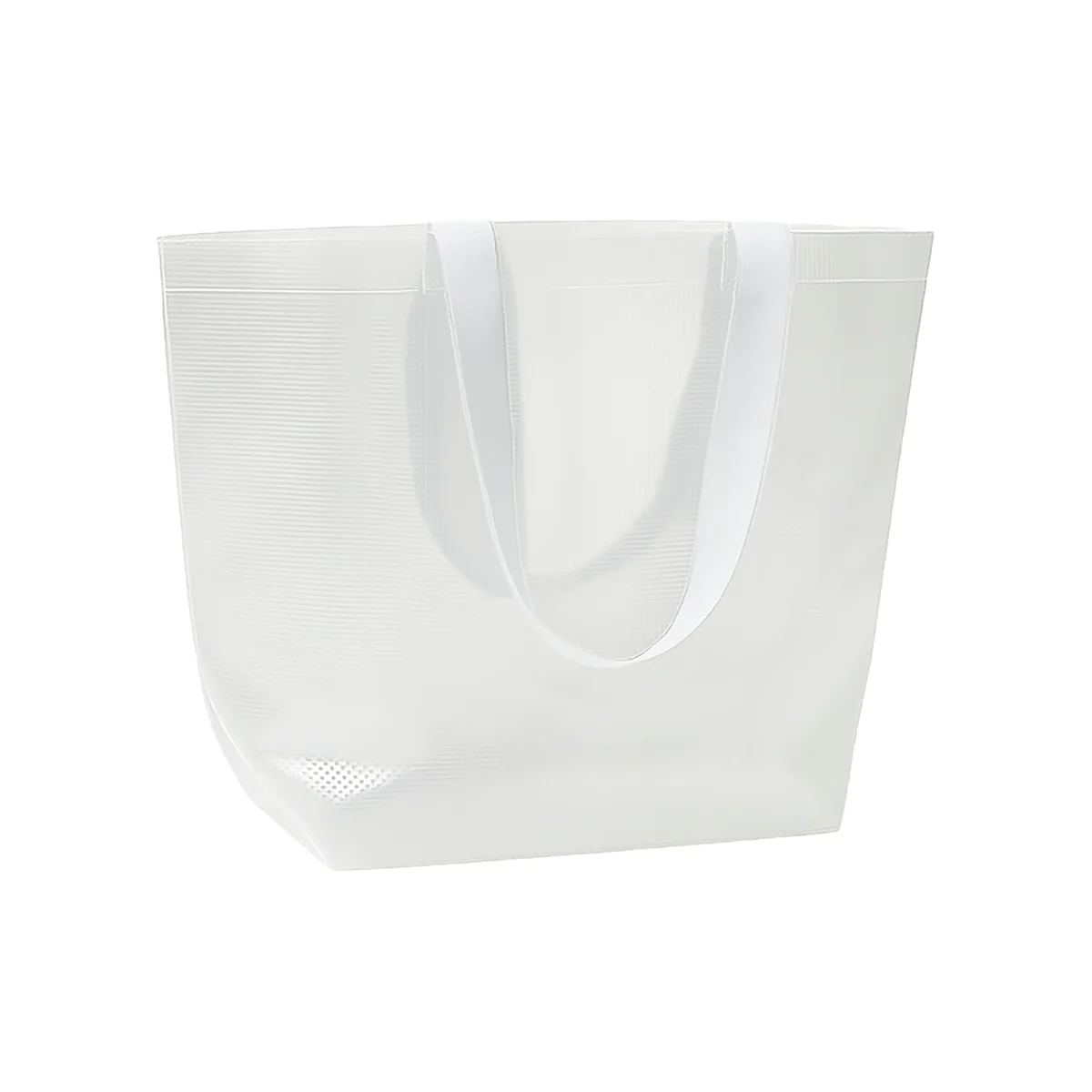
Event merchandise should fit the moment when someone receives it. A visitor walking around a trade show all day has different needs from an employee attending a two-day team gathering. To choose well, follow the participant's route through arrival, registration, activities, breaks, and departure. This reveals whether the event needs recognizable staff clothing, a practical bag, or a gift intended for longer use.
This guide focuses on explaining the choice and preparing the order. Examples from Meenevabrik's catalog help compare practical options. A product does not become suitable simply because it can carry a logo. Consider what people will do with it during the event and after they leave.
Give each item one clear purpose
A team shirt helps visitors recognize staff. An attendee bag keeps printed materials together. A drinking bottle can support access to water if the venue provides filling points. These are separate tasks, and they do not require identical products. Write one short use case next to every item under consideration.
If the only explanation is that the event needs something to hand out, review the selection. Fewer items and a better distribution plan may work better. One suitable bag can be more useful than several individually packaged accessories that participants must carry all day. Consider whether people arrive by car or public transport and what they already need to bring.
The Brunate transparent PP shopper is one bag example. It has long colored polyester handles, a gusset, and a material weight of 110 g/m². Compare its dimensions with the materials being distributed. Transparency may suit the design concept, but it will not be appropriate for every document or personal item.
Choose clothing sizes from real information
If the team needs coordinated clothing, begin with the cut and material required for the activity. An indoor seminar, an outdoor competition, and a trade show stand present different conditions. Adult T-Shirt Hearvin is one catalog option to include in a comparison. Its suitability should be judged against the team's needs and the event format.
When participants are known, collect their choices using the specific model's size chart. Do not replace that information with a universal percentage distribution. The same size label can fit differently across cuts and suppliers. A sample or fitting set provides a better basis than assuming that everyone who usually wears a medium will need the same size here.
If spare garments are needed, choose the sizes using the actual participant list. Decide how exchanges will work on site and what happens to remaining stock. Review the logo on both smaller and larger garments. One artwork size may need adjustment to look balanced across the order rather than simply being applied unchanged to every piece.
Plan for weather and carrying the gift
For an outdoor event, consider how weather affects the product's use. With an umbrella, the opening mechanism, folded size, and storage after use all matter. The R-PET mini umbrella has automatic opening and closing, a bamboo handle, and a matching pouch. It is a candidate for mobile attendees, but inspect a sample to confirm the size suits the plan.
A compact item may be easier to carry than a large gift set during a walking-intensive day. Timing also matters. A box given at registration travels with the participant throughout the event. A gift handed over at departure needs storage space, a distribution point, and clear responsibility so nobody misses it.
For bottles, check venue rules and filling points. The 500 ml aluminum sports bottle with a carabiner provides an example of a smaller capacity with an attachment accessory. The carabiner does not establish suitability for climbing or carrying loads. Any instructions given to participants should reflect the product's intended use.
Compare the cost of the complete solution
Compare quotes with matching contents. Product cost, decoration, setup, packing, and delivery may be charged separately. A lower unit price does not automatically mean a lower finished-order total. Ask which work is included and which elements will be added later, particularly if items must be assembled into attendee bags.
Minimum quantities depend on the model and execution. Do not assume that all event merchandise starts at 100 or 500 pieces. A larger quantity is also not an automatic promise of a discount. If several quantities are being considered, request comparable quotes and choose using actual demand and the total cost.
Confirm lead time together with stock, artwork, and production requirements. Allow time for internal approval. If another colleague signs off the order, provide the reference, color, dimensions, design, and final quantity together. When sponsor logos are included, agree their order and relative sizes before approval. A late additional logo can change both the print area and the schedule.
Prepare distribution and record what worked
Create a simple table containing the product, recipient group, quantity, color or size, distribution location, and responsible person. Separate items intended for staff, speakers, and general attendees. If all goods arrive at one warehouse, use carton labels that match the distribution plan. That reduces sorting work during event setup.
Check the delivery before the event morning. Compare quantities with the order and inspect samples from different cartons. For clothing, verify the size distribution as well as the artwork. A small buffer creates time to respond to a shortage or packing error. Opening every carton immediately before registration makes even a straightforward issue harder to resolve.
After the event, record how many items were distributed and what remained. Ask the organizing team which products made the day easier and which created extra work. Keep photos of approved artwork and the product references. The next order can then build on real experience instead of repeating a generic merchandise list unchanged every year.